

A New Direction, A Long Time Coming
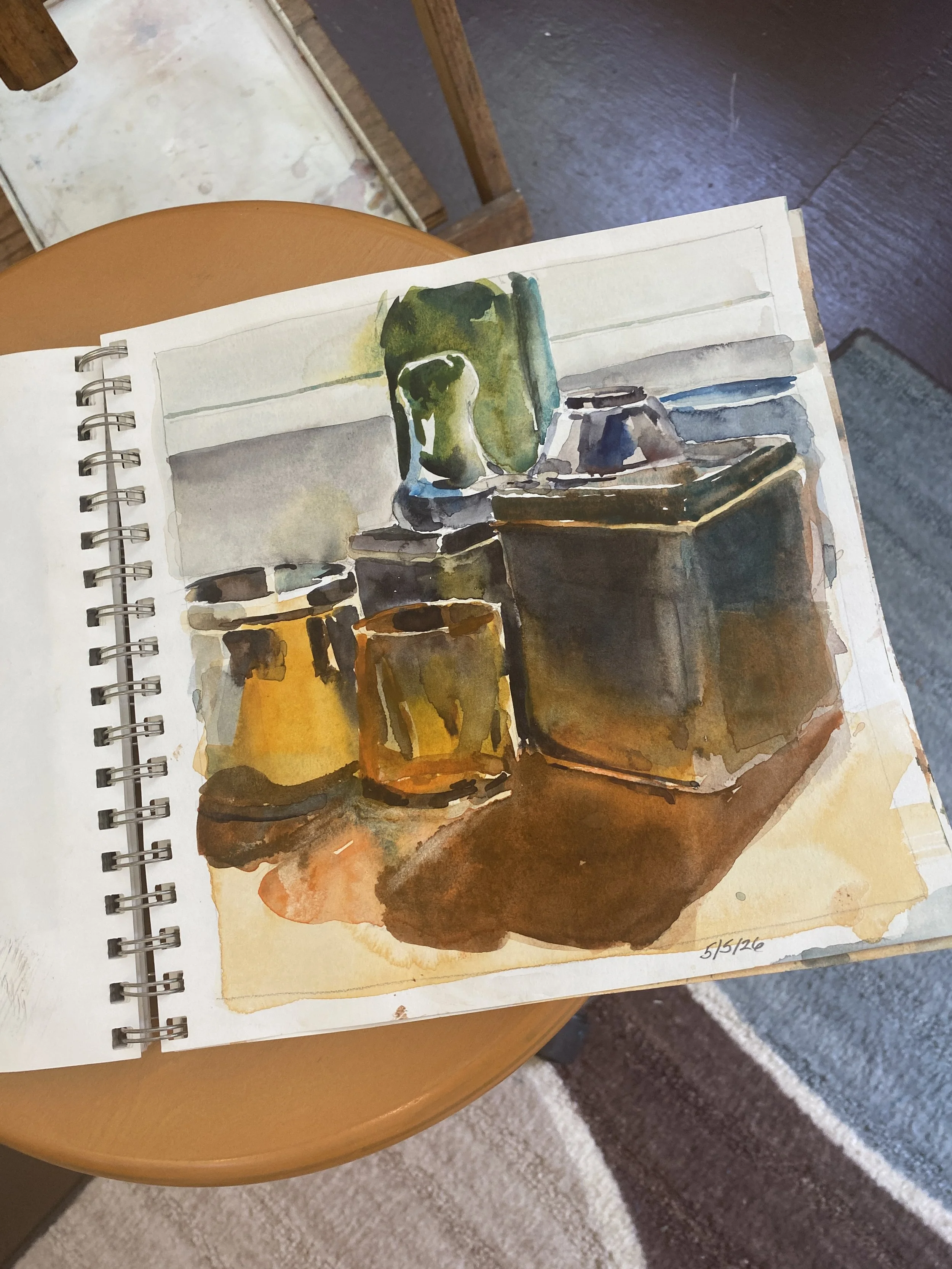
Inspiration is often found in my sketchbooks
I have set out in a new direction painting-wise. It involves a familiar subject but taken on in a new way. The change is a significant departure from the focus and direction of my work for the last three decades.
So, how did this come about?
The inner life of an artist is complex. The internal process that results in new directions is completely unique and individual. Inspiration, direction and action are universal elements for all artists and are essential for moving idea from mind to (in my case) paint and paper. For some of my artist friends, inspiration, direction and action come as lighting bolts with new inspirations turning to direction and action in very little time.
Such is not the case for me. Although I collect inspirations constantly, there is always extended time between those and the resulting work. What gets in the way? Many things really but primarily is a circumspect nature that seeks well-rounded understanding before moving forward.
Artists who get started later in life often select the landscape as a subject. Such was the case for me. My first ‘inspirations’ were landscape scenes that were easily accessible and, as subjects go, pretty forgiving of errors. As of this year, I have been at this, with serious goals and intentions, for 40 years. Although my work has included subjects other than the landscape, the vast majority of work offered for exhibit or sale has been landscape paintings. At this point, it is a subject that has been explored pretty thoroughly. One might say it is well-known and even well-worn.
Well-worn is the way it feels to me and has, in fact, felt this way for sometime.
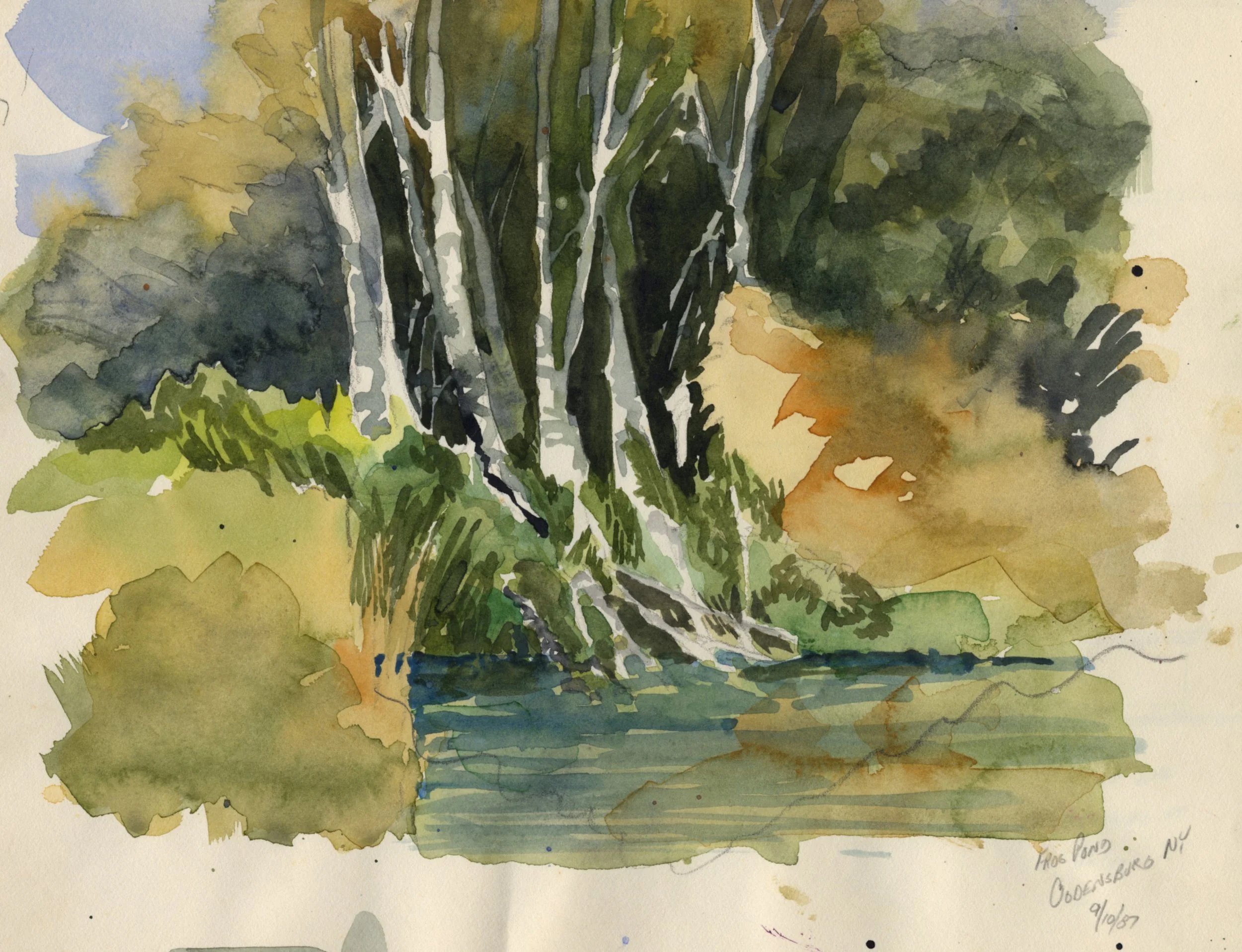
“Frog Pond, Ogdensburg NY”
A landscape watercolor sketch from the early years of my watercolor painting life.
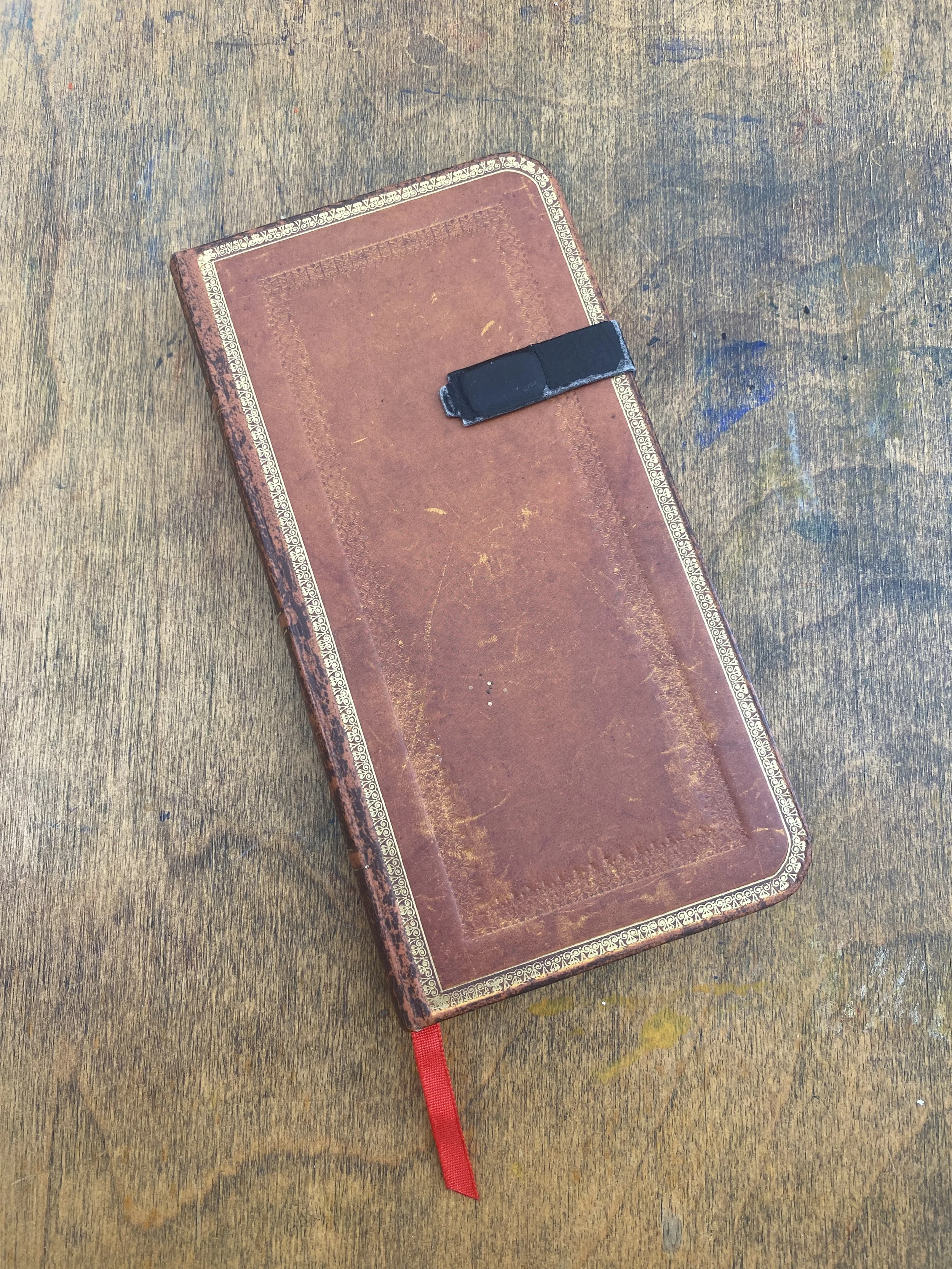
My Artist’s Journal
This is where I go for honest, objective conversations with myself.
It’s not well-known, even to those who know me best, but I keep an artist’s journal. The entries serve as the way to have conversations about all facets of my artists life and is an especially helpful tool for times when an honest, objective conversation is called for.
This particular journal started in 2013 and has many thoughts and ‘honest objective conversations’. There are conversations from as far back as 2016 that suggest the landscape as a subject was becoming ‘well-worn’. These early suggestions continued and developed into thread that has woven through many entries since. Other more recent entries in the years since highlight a desire to expand my work in both subject as well as media.
As mentioned above, I find inspiration often and many places. But the shift to direction and action takes longer. Often, the direction is not clear.
And then, suddenly, it is!
I can’t say that I’ve had many big directional shifts in my art career - one or two at most. Neither happened quickly. But the catalyst for direction and action was a confluence of inspiration with opportunity or a problem seeking solution.
A Foundational Moment
One of those directional shifts occurred when I realized the power and the value of working from direct observation. Again, like many older-starting, self-taught artists, I relied on photos and, to a large degree, my own very underdeveloped mental encyclopedia. As my career grew and more of my work was getting submitted - and rejected - from major watercolor exhibitions, it was clear that the work was missing something. It took an honest, objective conversation with myself, along with an honest, objective look at my work to realize the problem - the authenticity that comes from really knowing a subject was absent.
That was a directional moment that not only changed my working habits and process but, most importantly, revealed the value of working from direct observation. What started as a conscious, somewhat forced change in method, became a foundational conviction in my practice, methods and approach.
Subject Inspiration
Initially working from direct observation meant ‘en plein air’ painting. After all, the landscape was the subject of choice for me. The new practice pushed my work forward in ways I didn’t imagine possible.
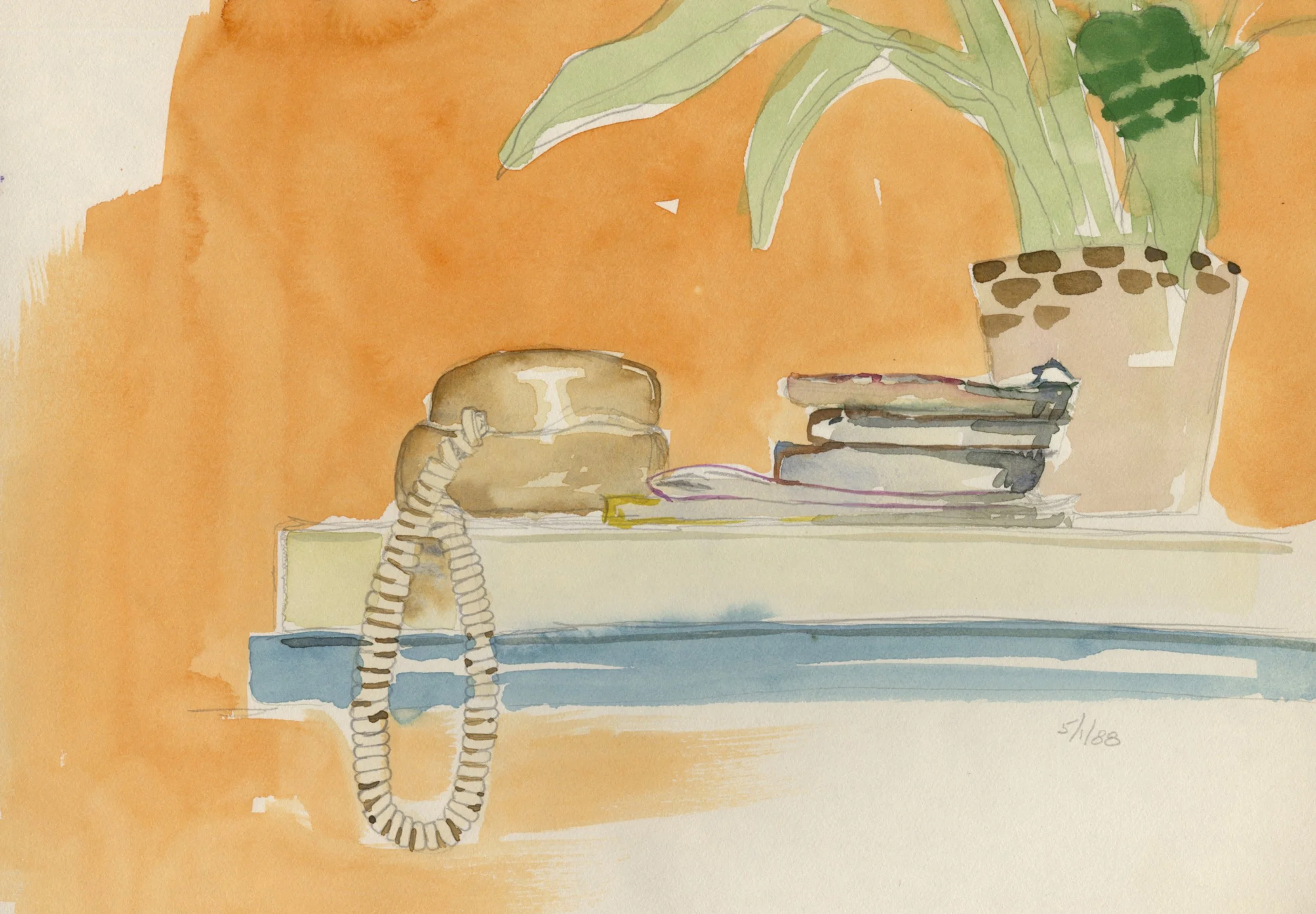
Sketch of an “inside subject”
An early example of my interest in collections of dissimilar objects and done during the early days of my development.
En plein air painting is not desirable during Vermont winters. Although it is possible to paint from the car, most winter days were spent working in the studio. There, the urge to work from direct observation could be satisfied either by looking out the window or painting an ‘inside’ subject. Still life subjects are the first to come to mind when thinking of “inside subjects”. Collections of dissimilar, ordinary objects and the relationships between them has been a compelling non-landscape subject for me almost from the beginning.
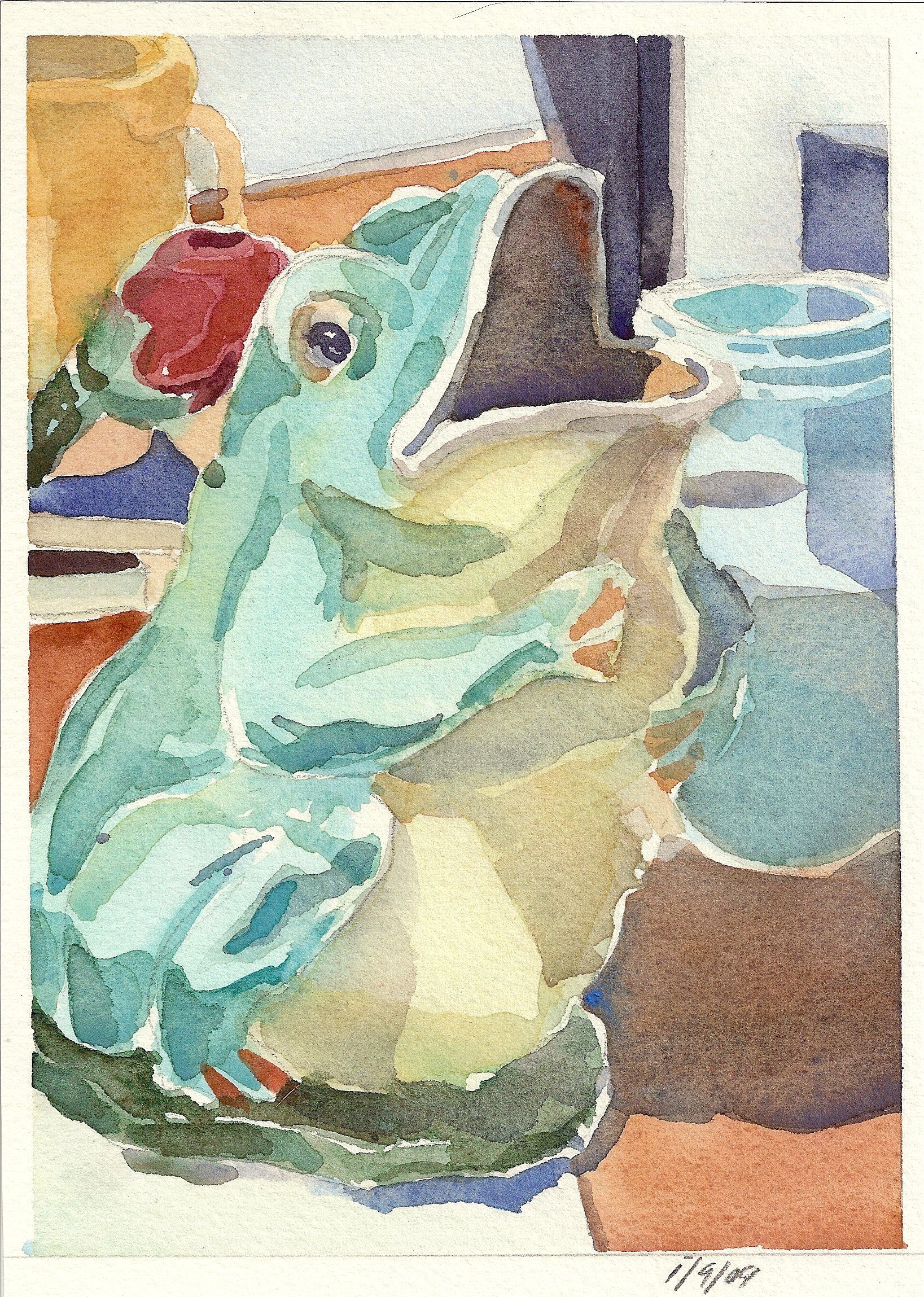
Still Life From Direct Observation
This piece is represents one of the earliest ‘inside subject’ explorations from direct observation. Dated 2009.
Setting up and painting still life scenes with ordinary objects was a natural extension of direct observation work. Early examples show an interest in color, pattern, highlights and reflections. Over time, these same points of interest would become the focus for this kind of work and represented development of aesthetic and composition over subject exploration.
This kind of exploration continued, somewhat sporadically during the years where most of my painting effort was directed toward en plein air landscape.
The body of work that began in those first years of new direction in landscape painting - about 15 years ago - and continue into the present, reveals a very different intention between the two subjects. Most landscape work was done on ‘real’ watercolor paper at half or quarter-sheet size; studio still lifes in the same period are all found in sketchbooks and at much smaller scale.
Only in looking back is it possible to see how those studio still life scenes developed into a distinct body of work with their own aesthetic focus and different technical approach.
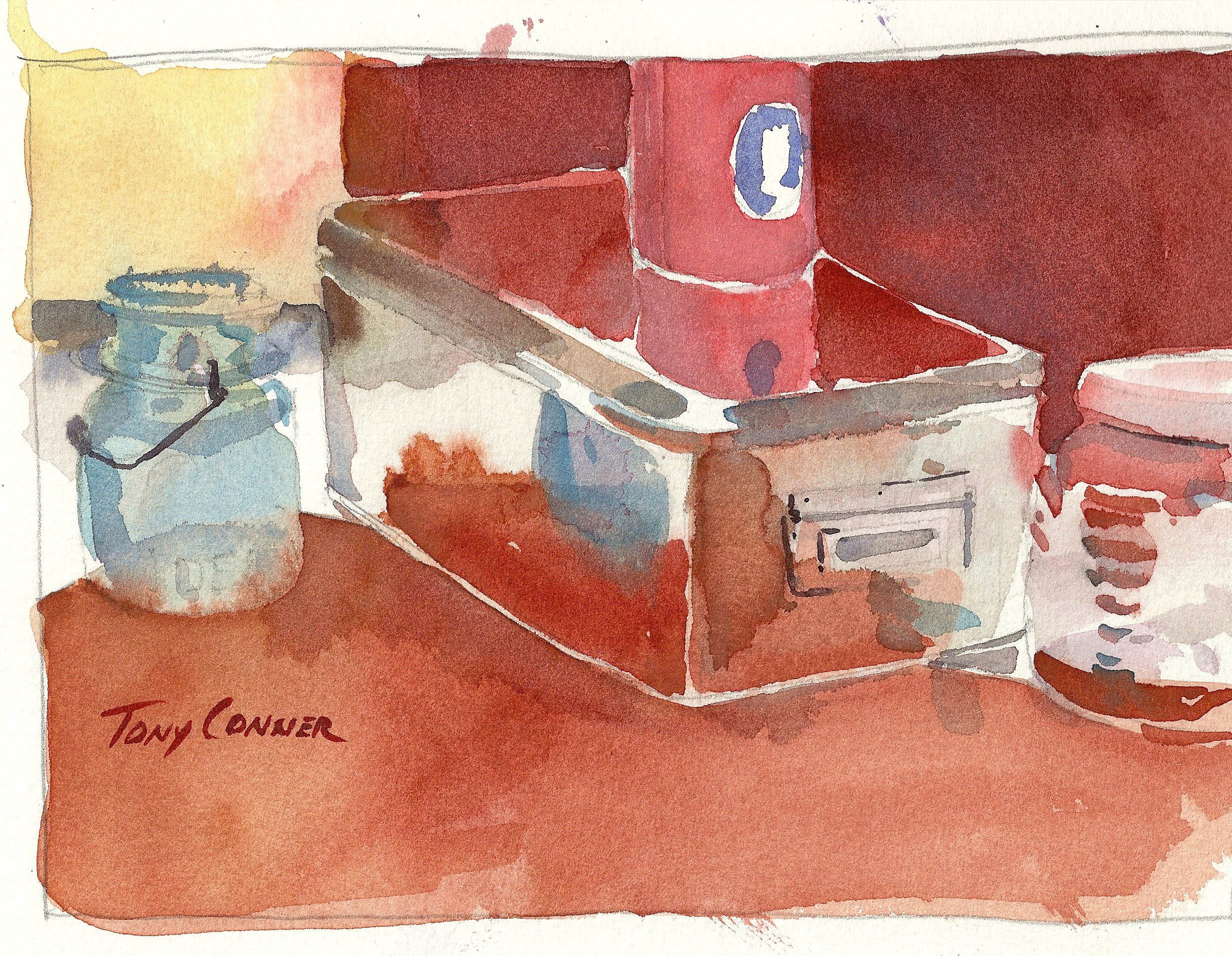
Glass And Chrome Still Life
Dated 2012
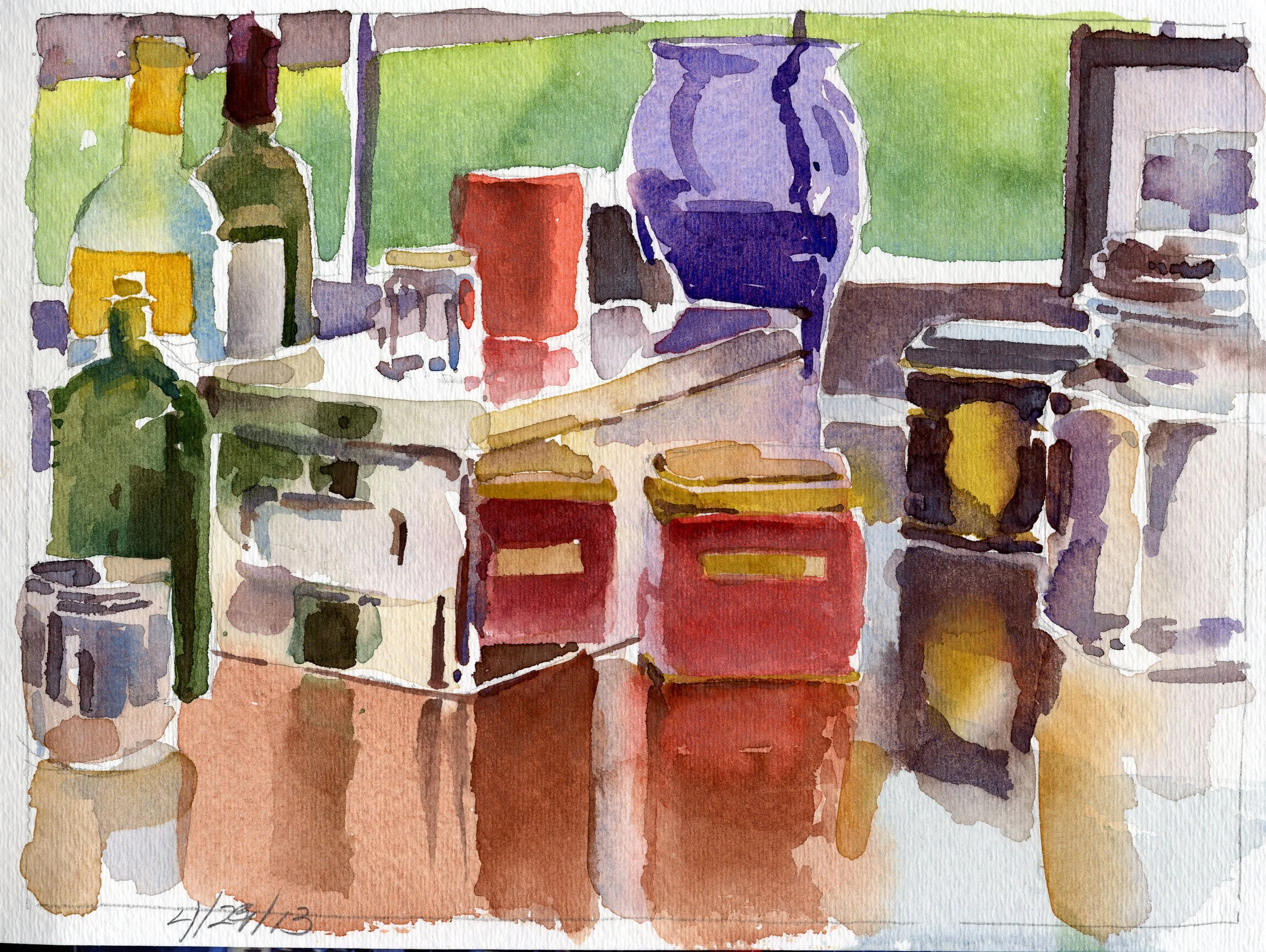
“Dresser Objects”
Dated April 2013, this piece includes the same silvery, reflective box as the 2012 image along with an obvious evolution of style and color dynamic.
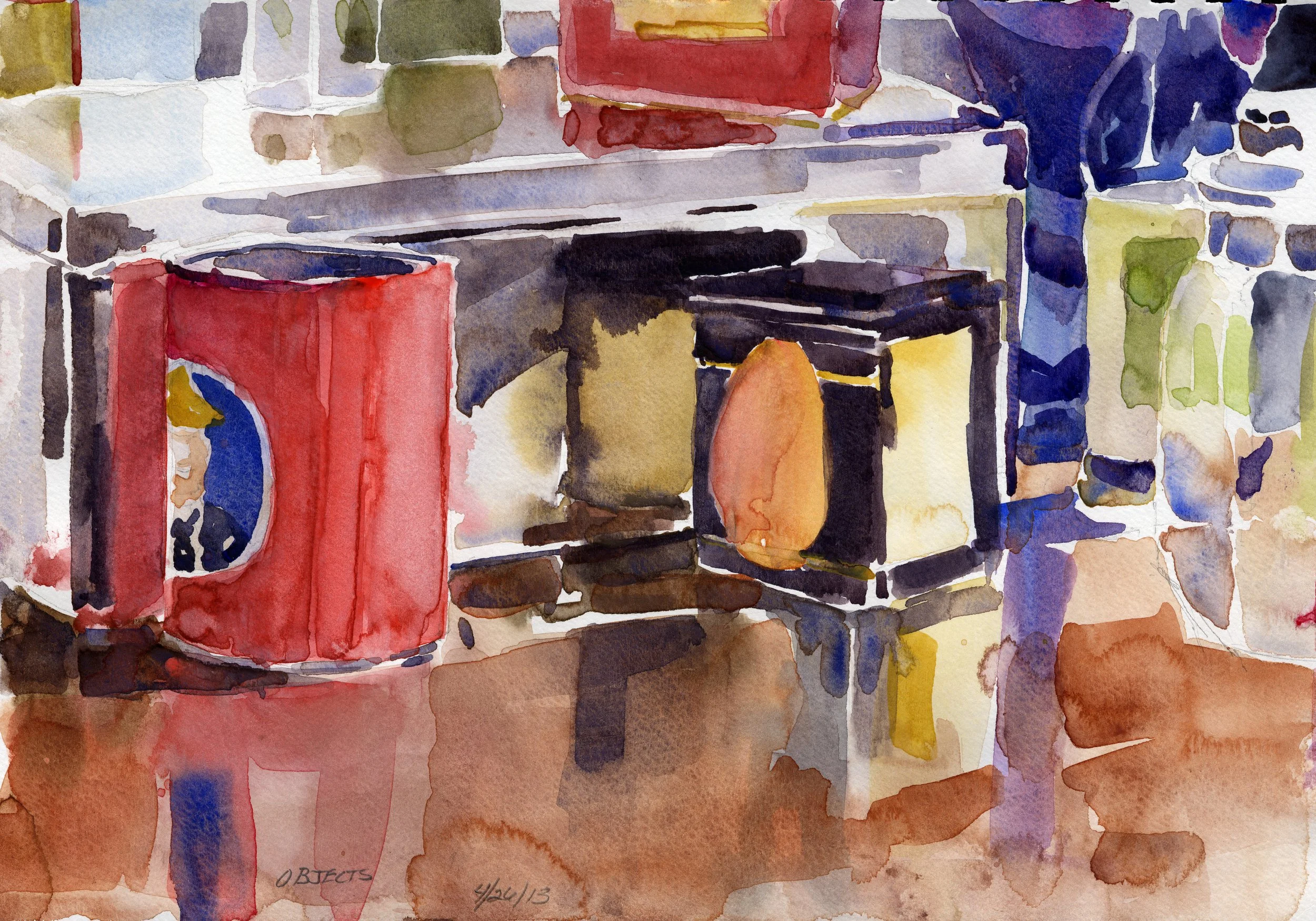
“More Objects On Dresser”
Another from 2013 where the patterns of reflection are the major theme
This body of work was never intended for exhibition or sale. As mentioned, they were done in the pages of sketchbooks. Nevertheless, the evolution of style, focus, technical approach, and visual theme were all revealing themselves, even if I wasn’t quite aware of it at the time.
The main theme preference emerging in this period is that of exploring transparency and reflection. In effect, each collection of objects favored glass and metal.
As happens when exploring subject and theme over time, visual knowledge increases. As visual knowledge increases, there is less and less focus on the technical detail and technical challenges and more expressive freedom.
For me, these still life scenes became a platform to explore shape, color, pattern and spatial relationships.
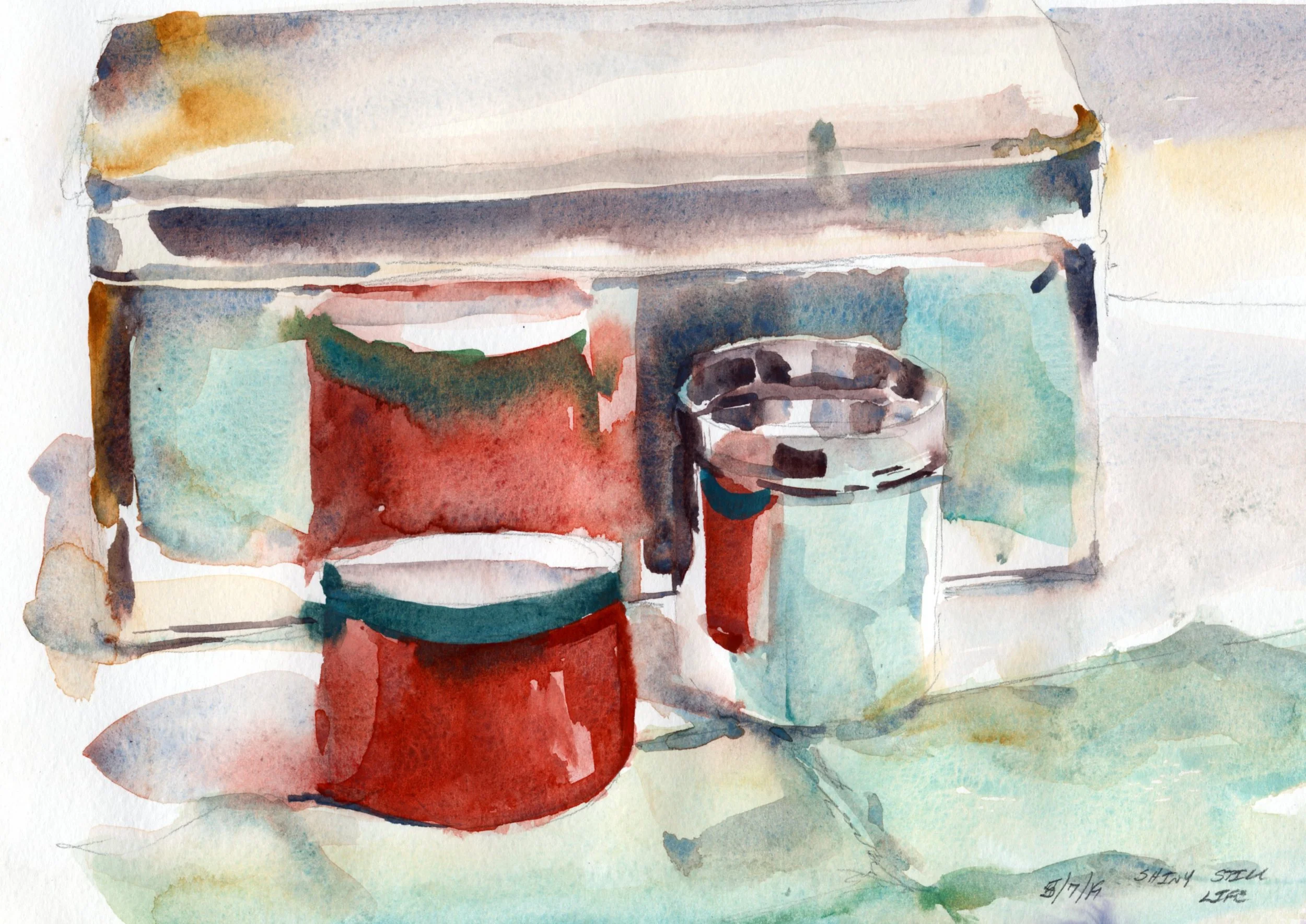
“Shiny Still Life”
From 2019, this painting is clearly a statement on reflection. Notice how the reflections are abstract but unifying elements.
At some point, the connections between the individual objects became a source of curiosity and visual focus. It dawned on me that both reflection and transparency created connections, joining separate objects to each other.
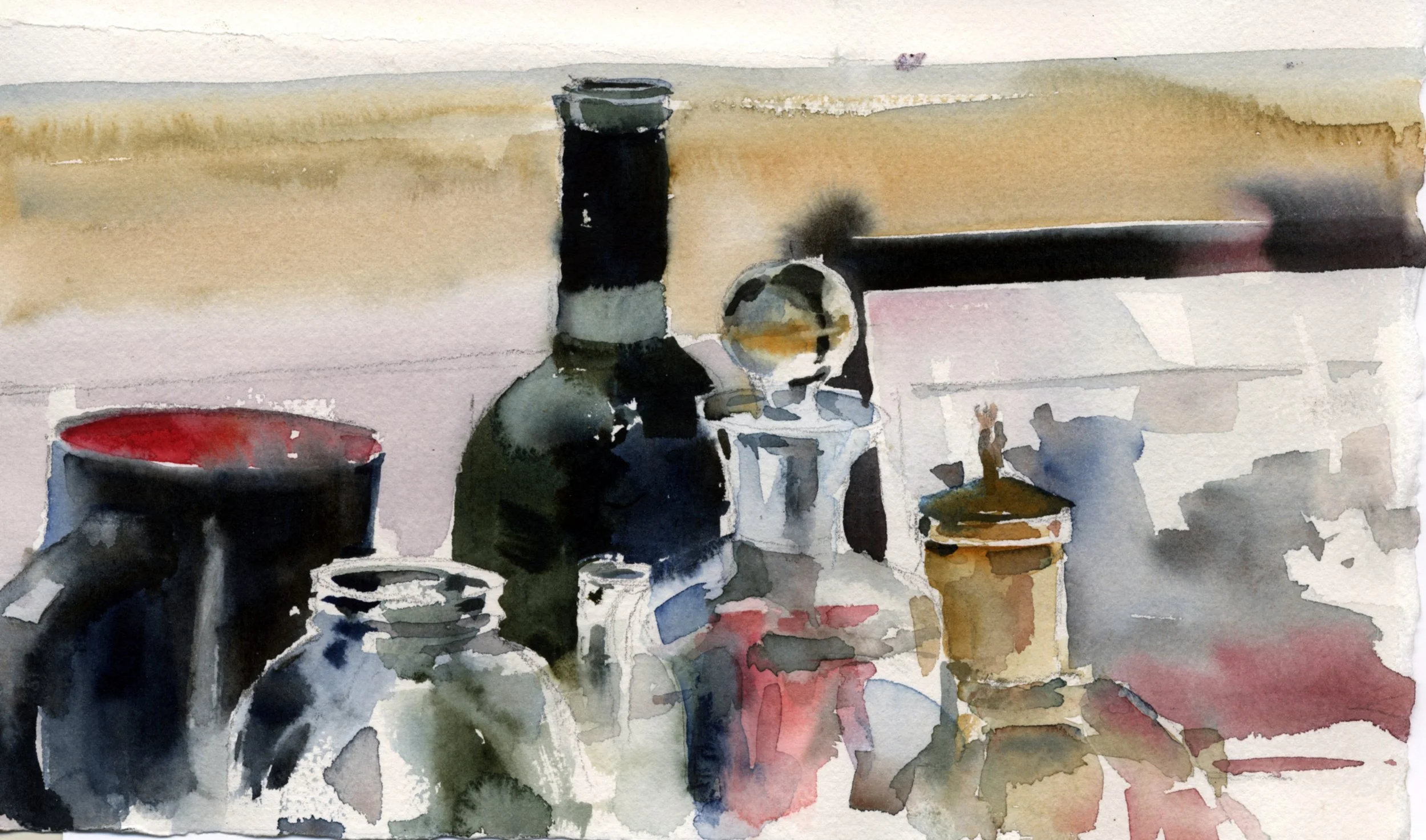
“Studio Objects”
From early 2025, in this one abstract shapes, rhythmic patterns and color create both contrasts and connections. This is one of the first paintings of this subject family to exist on ‘real’ paper outside of a sketch book.
All of the sketchbook based paintings and even the few that exist on separate pieces of paper are small scale - the largest being 9” x 12”. Given the actual size of the objects being painted, each is painted at near life-size. Scale becomes an important factor in the rest of the story and is one of the elements of confluence in the decisons that formed the structure of this new direction.
Problem Seeking Solution
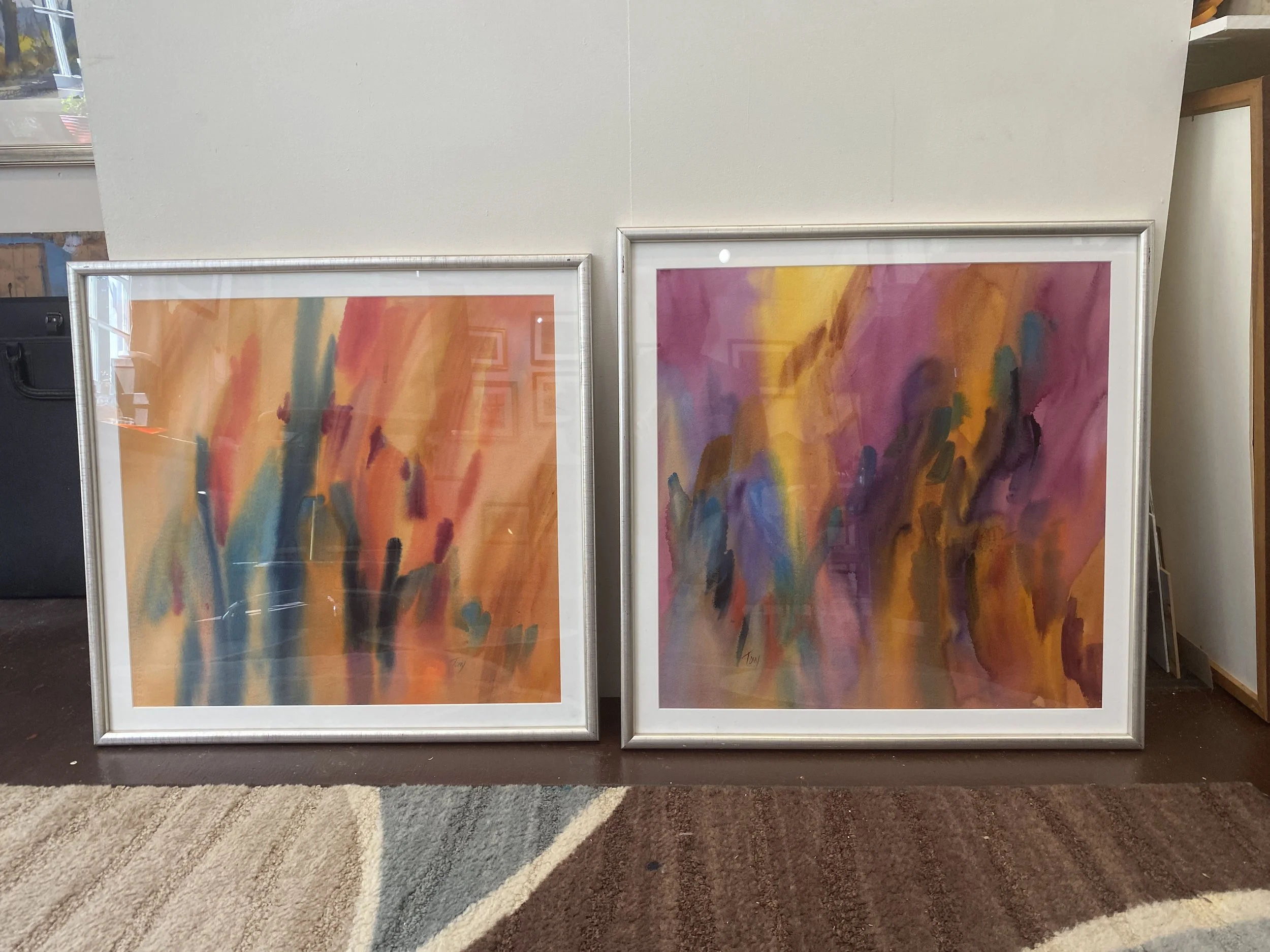
I have three paintings in the studio done to theme for a gallery where I once exhibited. They are abstract, at large scale, and in square format - three characteristics that make them very un-typical of my work - especially now, but even back when they were done. Unfortunately, they never sold. When the gallery closed, the three returned to the studio where they can still be seen as the three odd-ducks that they are when compared to everything else.
One visitor to a recent Open Studio commented on the paintings and, of course, the fact that they look so different from all my other work. I explained the story behind the work and lamented that they had drawn interest from others but were never purchased since they were such outliers.
They are still in their original frames as well. My other ‘standard’ work is not only standard in subject and theme, but more-or-less standard in size. Meaning paintings are interchangeable framing-wise.
This group are different in two ways : they are larger than most of the work I have been doing, and in square format which is completely different from landscape paintings which are in ‘landscape’ format. Without something to switch out, they have remained in the frames - a problem with no solution.
Repeating A Routine
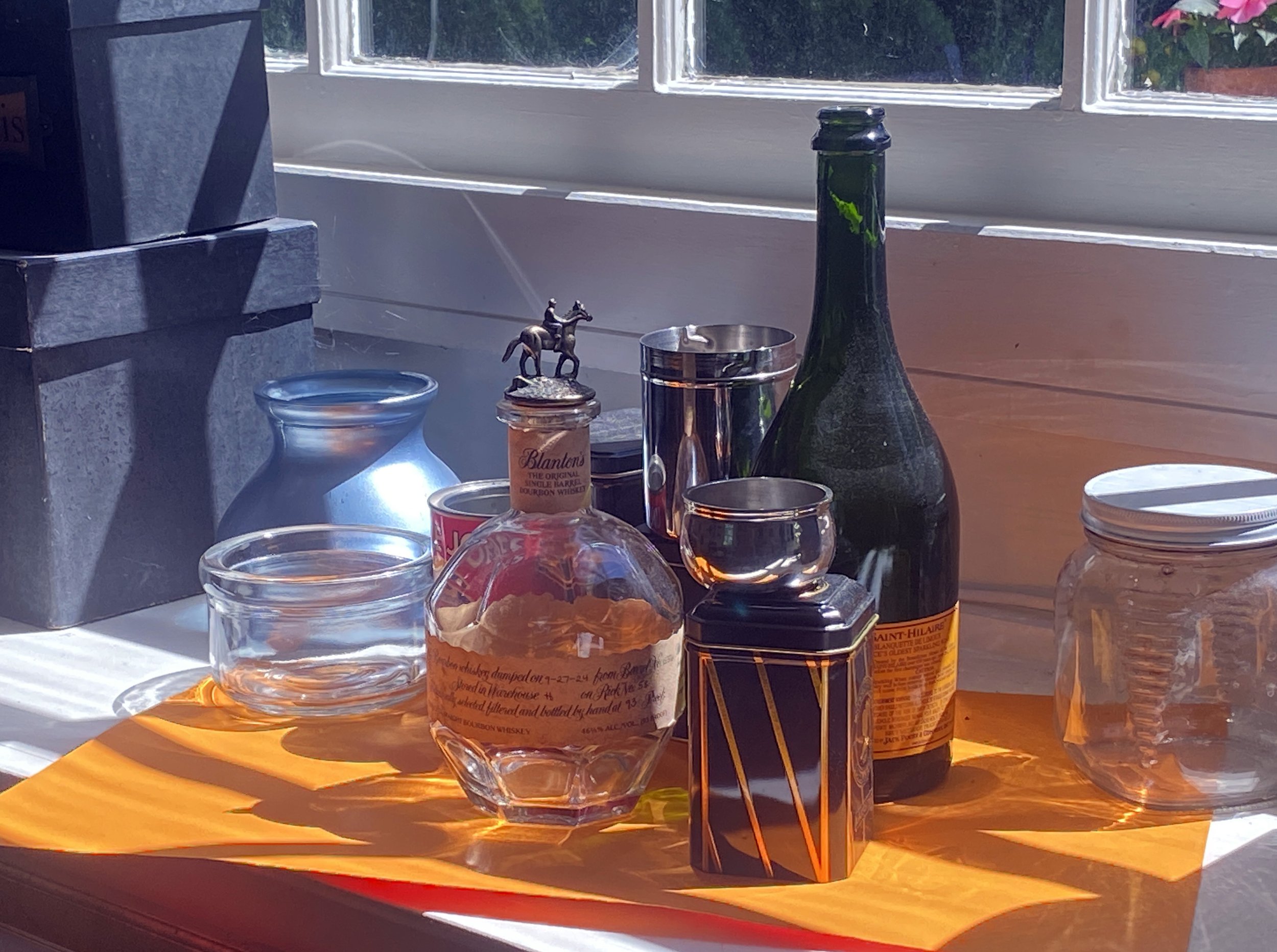
My normal daily studio routine always includes some form of painting, drawing or sketching. This past winter was a real Vermont winter that removed any thought of attempting plein air work. Instead, in line with a habit developed years ago, it was back to painting still life set ups from direct observation. The practice continues, even though we are well beyond winter.
Right after open studio, I set up this group for painting. As it happens, these little scenes are set up on a shelf right near a large window. The shelf catches morning light which allows me to paint and explore these informal still life subjects while directly lit. Since I want to have a similar light when I’m working, these small works take at least several days to complete - often longer.
Thes paintings are almost always done in a sketchbook. I use sketchbooks in various sizes and shapes. Since spring, I had be working in an 8” x 8” Aquabee sketchbook. I like working in square format for these still life scenes. It is unusual and is a challenge to compose as well.
The painting went well. It captured light, highlighted transparency and reflection and had the looser approach I prefer for this subject.
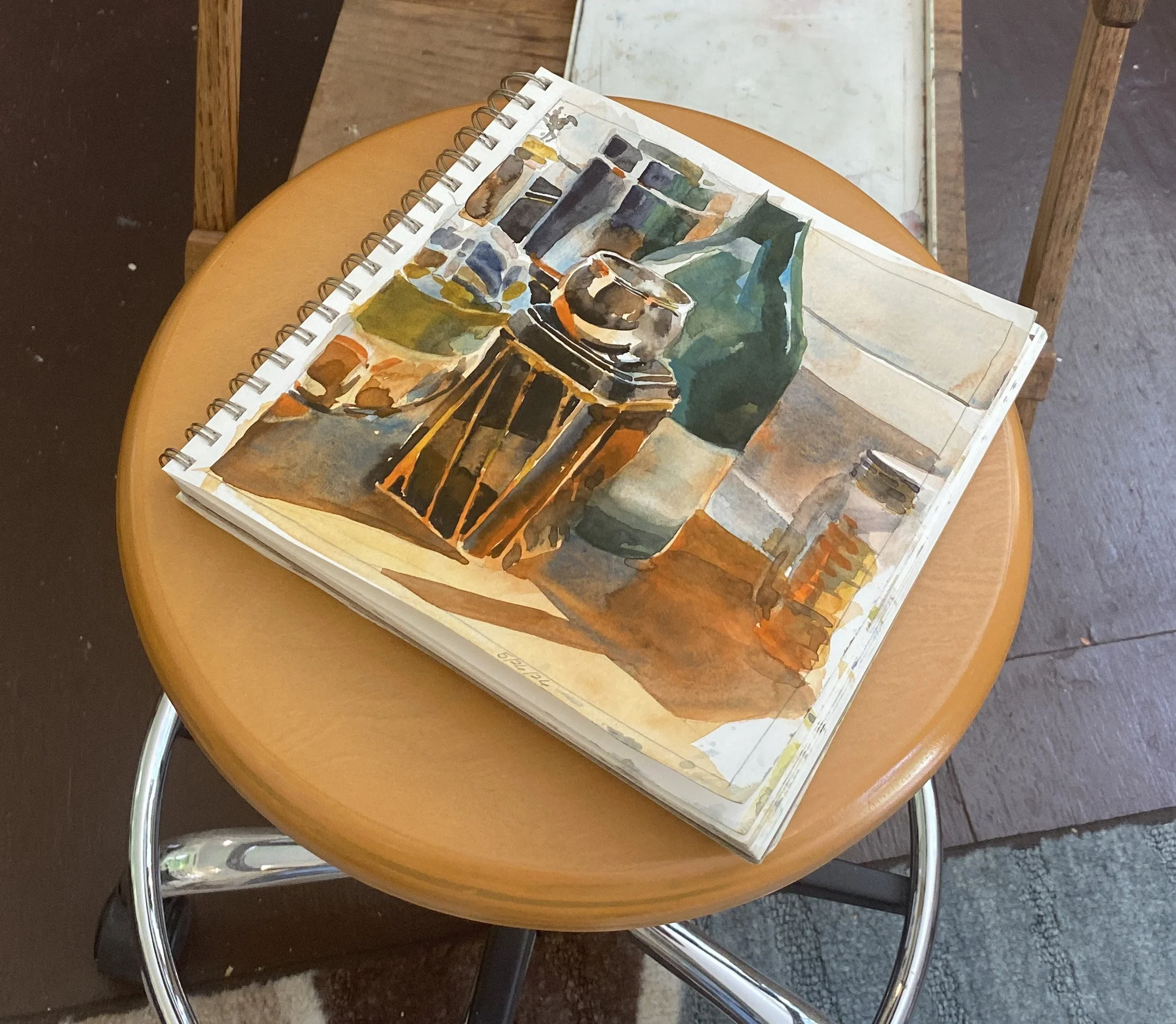
The Lightning Bolt
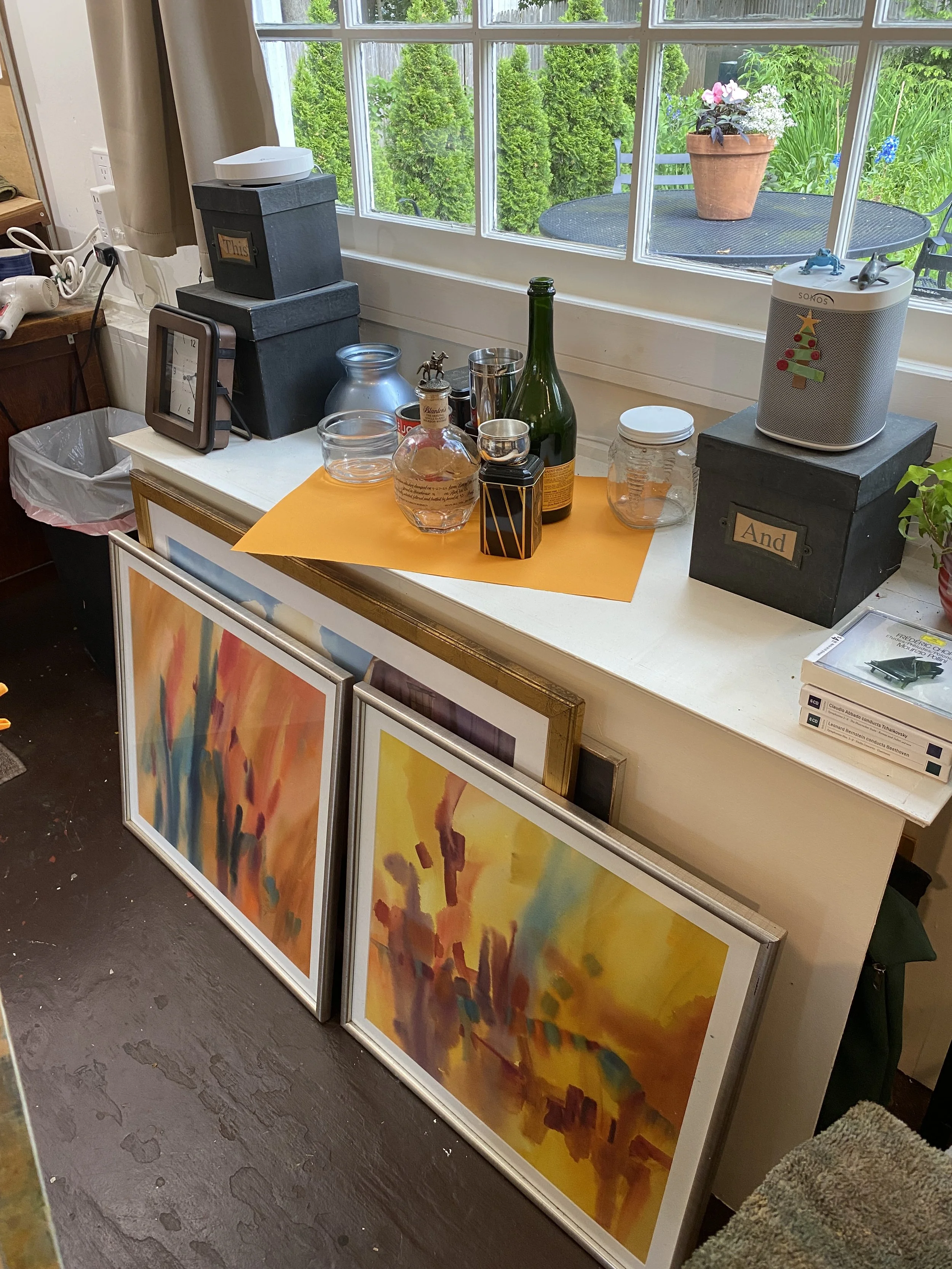
Constant Reminder
Two of the older works occupied this space just under the sunlit shelf
The open studio conversation stayed with me for days after the event and I was reminded regularly, since two of the paintings leaned against a vertical half wall just below the sunlit shelf. At some point when the work felt finished, there was, finally, confluence!
As I stood evaluating the work, separate threads of thought converged : square format, an enjoyable subject with many possibilities for exploration and development, large scale square format picture frames begging for new work and the desire to shift focus from a well-worn subject.
It might have been a bolt out of the blue, or just the inevitable conclusion to a drawn out mental process. No matter the case, confluence set direction and initiated action.
New Work In The New Direction
As I post this, the first work is underway. The reference scene was left untouched and is the subject for the initial painting.
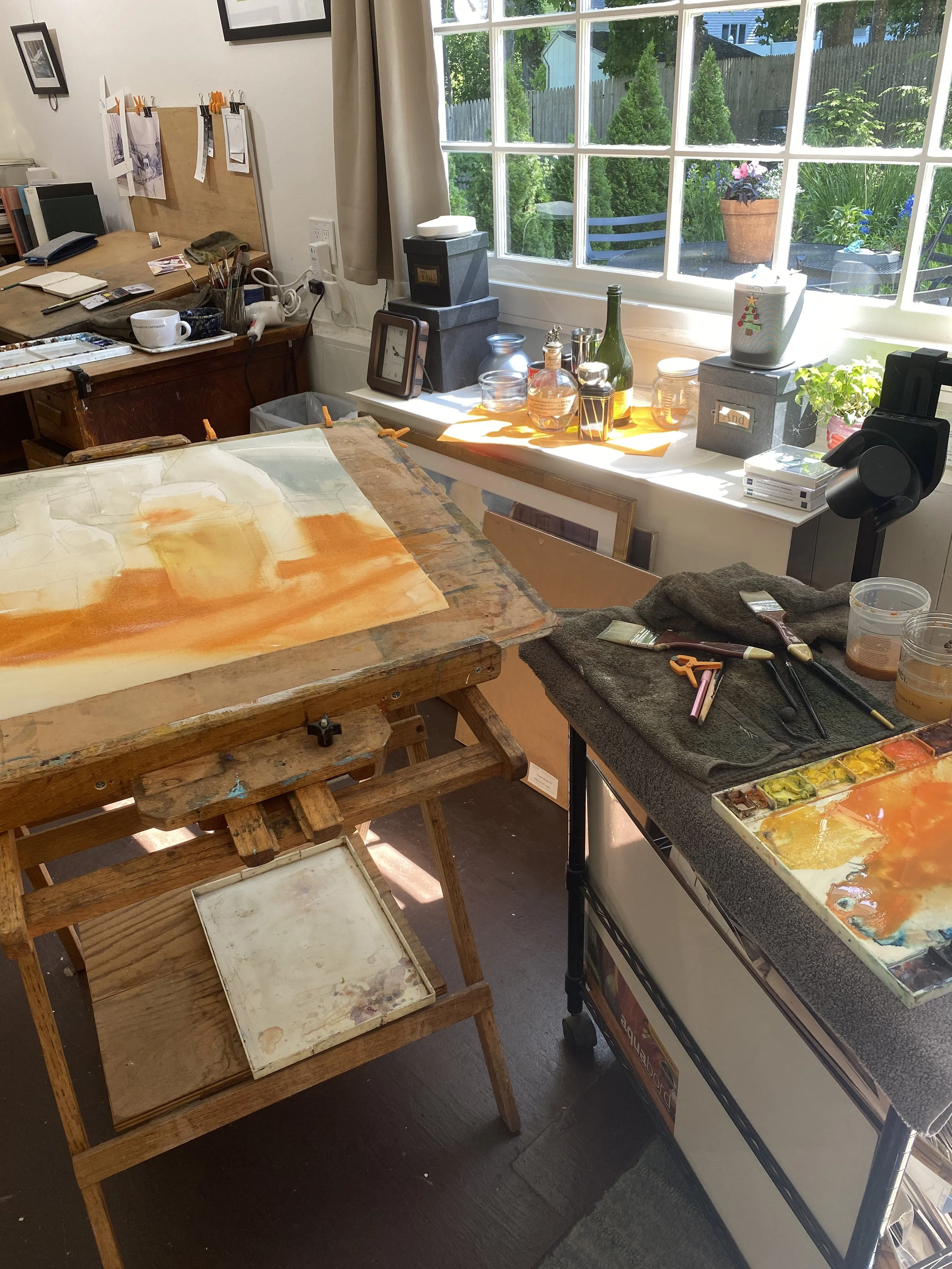
First Work Underway
Here’s shot of the first painting underway. The initial layer is on. More layers to come!
Getting used to larger scale work again has been an adjustment. Larger brushes are essential as is good color saturation, especially in the initial layers. The composition challenge of the square format is increased at large scale. Enlarging objects and maintaining both proportion and spacial relationship is increased at this scale as well.
Along with these, there are other less significant challenges. And, there’s the distinct possibility that I’ll encounter others as the series develops. Even so, the challenges are a small price to pay in return for the chance to work with renewed energy on a fresh subject that requires adjustment to my habitual approach.
It is my hope to have one or two pieces ready for my next Open Studio on June 20th.
What Of The Landscape
Landscapes are still a compelling subject for me and certainly won’t be abandoned. I still have places to show this type of work and want to be creating new pieces for upcoming exhibits.
But, I expect these new works to inform my approach to other subjects, including landscape. Taking on new directions that require new approaches and adjusting or abandoning old habits is one of the best ways to boost skill, creativity and productivity.